How Much Does a Mini-Split Installation Cost in Sacramento and Roseville?
I'm Vitaly, the owner of ARC Heating and Air Conditioning. I've been in the trades for over 20 years, the last several of them as a service manager at a larger HVAC company here in Sacramento. I started ARC in 2023 because I got tired of the sales-driven, change-it-out-and-move-on culture at the bigger shops. My customers wanted somebody who'd actually look at their problem, think about it, and fix it the right way. So I built the kind of company I wanted to work for.
That's the lens I'm writing this from. No upselling, no scare tactics. Just real numbers and the stuff I'd tell you on your driveway if you called me out for an estimate. Mini-splits are one of the HVAC services I work on most often, so this is a topic I get asked about almost every week.
What is a mini-split, and why are so many Sacramento homes getting them?
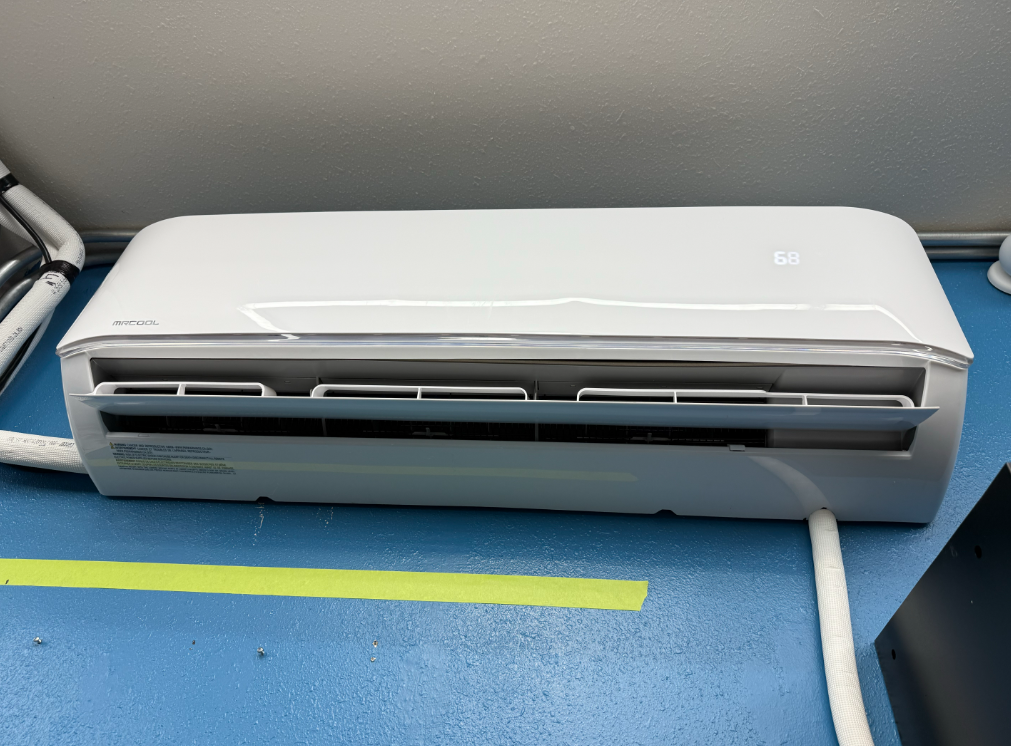
A mini-split (also called a ductless heat pump) is an HVAC system that heats and cools without using ductwork. Two main parts: an outdoor compressor unit, and one or more indoor air handlers mounted on a wall, ceiling, or floor. They're connected through a small three-inch hole in the exterior wall.
I install a lot of these around here, and the reasons are pretty consistent:
- Older homes without ductwork. A lot of midtown Sacramento, East Sacramento, and pockets of Roseville were built before central air was standard. Retrofitting ductwork into those houses is expensive and invasive. A mini-split skips all that.
- ADUs, garage conversions, and additions. California's ADU rules opened the floodgates on backyard units and garage conversions. Trying to extend existing ductwork to a detached ADU almost never makes sense. Mini-split is usually the right call.
- Hot upstairs bedrooms. I get this call constantly in Roseville and Rocklin. Two-story house, central system can't keep up upstairs in July, the kid's bedroom is 82 degrees at bedtime. A single-zone mini-split in that one room solves it without replacing the whole system.
- Energy efficiency. Modern mini-splits regularly hit SEER2 ratings of 20 or higher, which matters when you're staring down a Sacramento summer cooling bill.
Real pricing breakdown for the Sacramento area in 2026
Here's what I see across actual jobs in Roseville, Sacramento, and the surrounding areas we cover. These are installed prices, including equipment, labor, electrical, and permits.
Single-zone systems (one indoor unit)
| Capacity | Typical use case | Installed cost |
|---|---|---|
| 9,000 BTU | Bedroom, home office, small ADU | $4,500 – $6,000 |
| 12,000 BTU | Master bedroom, living room, garage conversion | $5,000 – $7,000 |
| 18,000 BTU | Large open living space, larger ADU | $6,000 – $7,500 |
| 24,000 BTU | Large room or open floor plan | $6,500 – $8,500 |
Multi-zone systems (one outdoor unit, multiple indoor units)
| Configuration | Typical use case | Installed cost |
|---|---|---|
| 2-zone | Bedroom + living room, or two upstairs rooms | $7,500 – $10,000 |
| 3-zone | Whole upstairs of a two-story home | $9,000 – $12,500 |
| 4-zone | Whole-home ductless for a small to mid-size house | $11,000 – $14,000 |
| 5+ zone | Larger whole-home replacement | $13,000 – $18,000+ |
If somebody's quoting you well below these ranges, ask them what's not included. Nine times out of ten there's a corner being cut, usually the permit, the line set length, or the electrical work.
What actually drives the price up or down?
Six things do most of the work:
- Number of zones. Each indoor unit adds equipment, labor, and refrigerant line work. The first zone is the most expensive per BTU. Each one after that gets cheaper on a per-unit basis.
- BTU capacity (sizing). Sizing is the single most important thing in whether your mini-split will actually keep you comfortable through a Sacramento August. Oversized systems short-cycle and leave the room humid. Undersized systems run constantly and never quite catch up. I've gone behind installs where the previous contractor just eyeballed it, and the customer had been suffering for two summers. Don't skip the load calculation.
- Brand and tier. Mitsubishi and Daikin sit at the premium end with the longest warranties. Fujitsu, LG, and Bosch are solid mid-tier picks. There are budget brands out there, but the warranty support and parts availability are weaker, and that catches up to you about five years in. There's no one "best" answer.
- Electrical work. Most mini-splits need a dedicated 240V circuit and a disconnect at the outdoor unit. If your panel has space and is on a convenient wall, no big deal. If your panel is full or sitting on the wrong side of the house, you might be looking at a sub-panel or a longer circuit run, which adds $500 to $2,000.
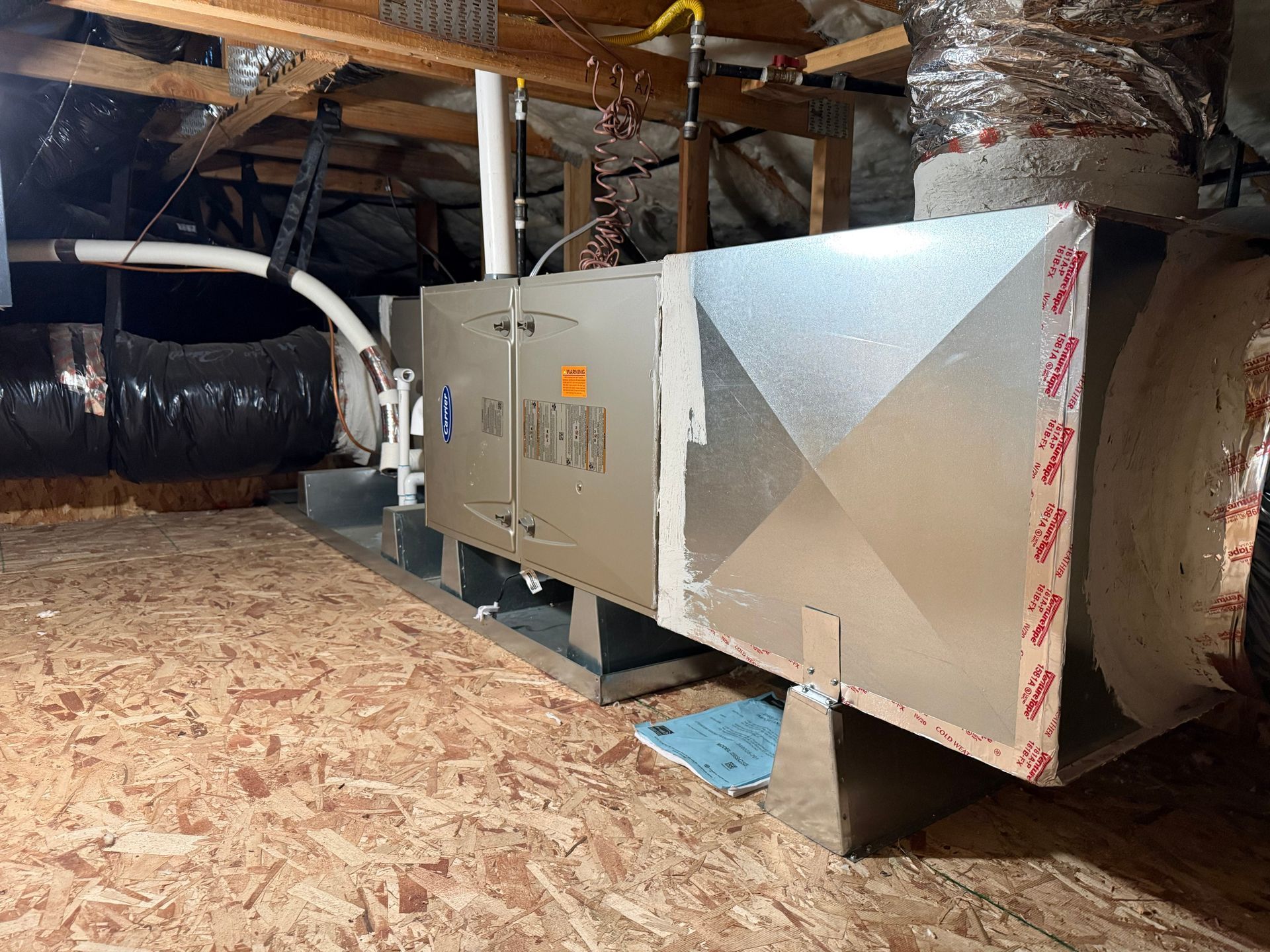
- Line set length and routing. The refrigerant line set comes in 25-foot lengths. Longer runs or tricky routing through finished walls, soffits, or attic spaces takes more time and material. Sometimes a small change in where we put the outdoor unit saves the customer real money.
- Permits and inspections. Sacramento County and the City of Roseville both require permits for mini-split installs. Permit fees usually run $150 to $400. Anyone who tells you they can "skip the permit to save you money" is doing you no favors. That shortcut shows up later when you sell the house and the inspector finds unpermitted equipment.
The complex jobs are where I actually earn my keep
Most of what I do isn't textbook. The reason I left the bigger company was because their answer to almost everything was "just change it out." A whole new system, fastest install possible, on to the next call. Sometimes that's right. A lot of times it isn't.
"There's almost always a smarter answer than 'rip it out and replace it.' You just have to be willing to slow down and look at it."
A few examples from this past year:
- A house in East Sacramento where the previous contractor said the only fix was a $22,000 full system replacement. The actual issue was a sagging duct and a miscalibrated thermostat. Cost the homeowner about $1,400.
- A garage conversion in Roseville where the customer had been quoted for a 24,000 BTU mini-split. The room didn't need that. We sized it properly at 12,000 BTU, saved her almost $3,000, and the room cools faster now than it would have with the oversized unit.
- A two-story in Rocklin where two other companies wanted to add a second full central system. We put in a two-zone mini-split for the two hot bedrooms upstairs and left the existing system alone. About a third of the cost.
This is what I mean when I say I like the complicated jobs. There's almost always a smarter answer than "rip it out and replace it." You just have to be willing to slow down and look at it. If you want to hear how it's gone for other folks in the area, I'd rather just point you to what my actual customers have said than try to sell you on it myself.
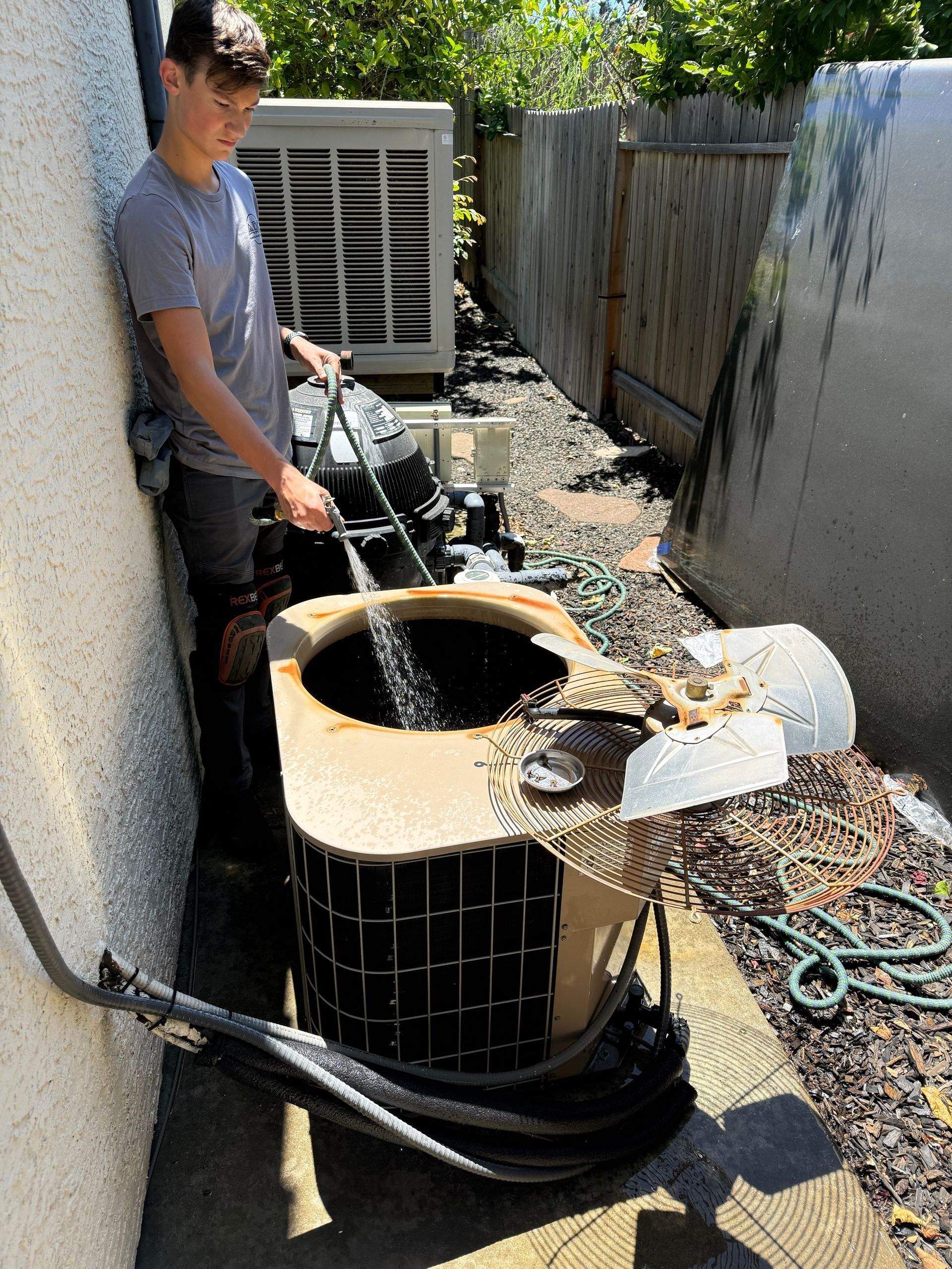
My son comes with me on a lot of these. He's in high school and learning the trade part-time. So if you see two of us pull up to your house, that's why.
When does a mini-split make more sense than a traditional central system?
A mini-split is usually the right call when:
- Your home doesn't have ductwork, and adding it would mean tearing into walls and ceilings
- You're conditioning an addition, ADU, garage conversion, or sunroom that the main system can't reach
- You have specific rooms that are always too hot or too cold, and you don't want to replace the whole central system
- You want different temperatures in different rooms (zone-by-zone control)
- Energy efficiency is a top priority
Stick with traditional central when:
- You already have ductwork in good condition
- You're replacing an existing central AC and furnace at end of life
- You don't like the look of indoor wall units
- Whole-home heating in a really cold climate is the main goal (though modern cold-climate mini-splits have closed most of that gap)
If you're not sure which fits your house, that's exactly the conversation I'd rather have with you for free upfront than after we've installed the wrong thing.
What's included in a proper mini-split installation?
When I quote a mini-split, here's what's in the scope:
- A load calculation (Manual J) to size the system correctly for your home
- Equipment selection matched to your space, your usage, and your budget
- Mounting brackets and pads for the outdoor unit, leveled and secured to seismic code
- Refrigerant line set, properly insulated and protected from UV exposure
- Condensate drain line with a clean exit point
- Dedicated electrical circuit, disconnect, and surge protection
- Vacuum testing of the refrigerant lines before charging
- Permit pulled and inspection scheduled
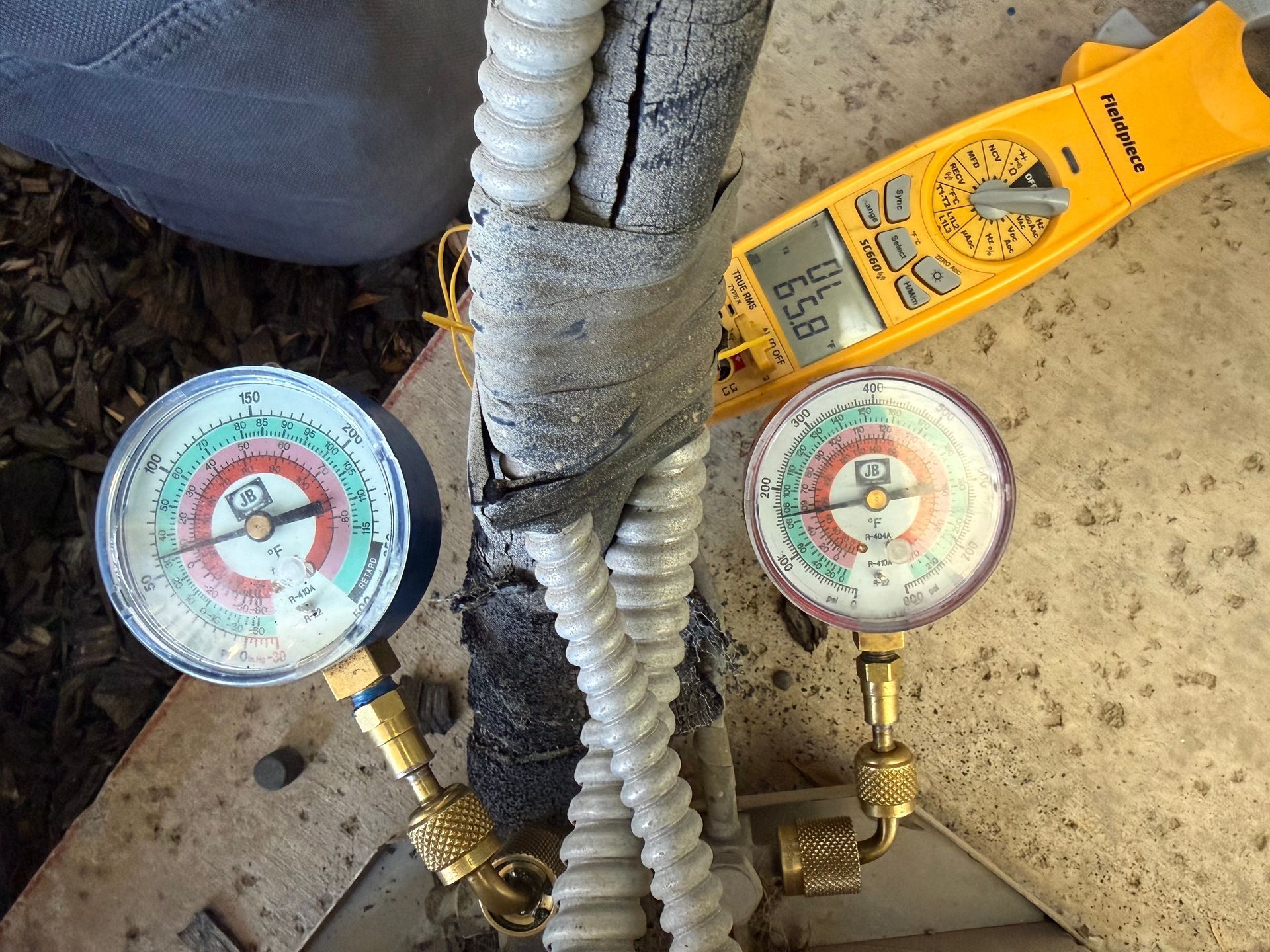
- System commissioning, including verifying refrigerant charge, airflow, and operation in both heating and cooling modes
- Walkthrough with you on remote use, filter cleaning, and seasonal care
- Manufacturer warranty registration
If a quote you're comparing doesn't include all of these, ask the other contractor why. The difference between a $4,500 install and a $7,000 install is usually hidden in what's left off the scope.
How long does a mini-split installation take?
For most homes I work in:
- Single-zone install: 4 to 8 hours, usually one day
- Two to three zone install: 1 to 2 days
- Four or more zone install: 2 to 4 days
Weather, electrical surprises, and inspection scheduling can stretch the timeline. I'll give you a clear schedule upfront and stick to it. If something changes, you hear from me directly, not a dispatcher.
How long do mini-splits last in the Sacramento climate?
A well-installed, properly maintained mini-split in this area typically lasts 15 to 20 years. The two biggest things that shorten that lifespan:
- Skipped maintenance. Dirty filters, clogged condenser coils, and ignored refrigerant leaks will cut a system's life in half. This is why I push annual maintenance plans pretty hard. They're not a profit center for me, they're how I keep your system from dying at year eight.
- Poor installation. Improper line set sizing, contamination during install, or incorrect refrigerant charge will cause problems that show up two to five years in, long after the install is paid for.
This is why I get so particular on the install side. A mini-split is a long-term investment for your house. Cutting corners on day one costs a lot more over the life of the system than it ever saves on the front end.
Frequently asked questions
Yes. SMUD (for Sacramento residents) and Roseville Electric both offer rebates for high-efficiency heat pump installations. Federal tax credits under the Inflation Reduction Act can also cover up to 30% of the cost of qualifying heat pump systems, with caps that depend on your income. When I quote your job, I'll tell you which rebates you actually qualify for.
Technically, kits exist. Practically, no. Mini-splits need refrigerant handling, which legally requires EPA Section 608 certification. They also need permits, electrical work, and proper vacuum and pressure testing. A DIY install almost always voids the manufacturer warranty and frequently leads to refrigerant leaks, premature compressor failure, and resale issues down the road.
A mini-split is a type of heat pump. The "mini-split" name refers to the ductless configuration. So all ductless mini-splits are heat pumps, but not all heat pumps are mini-splits. You can also have ducted heat pumps.
Modern indoor units run between 19 and 35 decibels, quieter than a whisper at the low end. The outdoor unit is louder, typically 50 to 65 decibels, similar to a refrigerator. Placement matters. I think about where the outdoor unit sits relative to bedrooms and outdoor living spaces before I drill the first hole.
Generally yes, especially in older Sacramento neighborhoods where the alternative is a window unit or no cooling at all. Buyers see ductless systems as a feature. Just make sure the install is permitted, because unpermitted work shows up in inspection and slows down a sale.
If you want a real quote, give me a call
When you call ARC, you talk to me. Not a call center, not a sales rep on commission. Quote stands. No surprises. We'll make it better.
— Vitaly, ARC Heating and Air Conditioning