An 18-Year-Old AC and a Musty Smell: Why We Didn't Tell Her to Replace It
I get a version of this call every spring. Someone goes to turn on their AC for the first time after a long winter, the air comes out, but something smells off. Sometimes it's a musty, mildewy smell. Sometimes it's a faint burning smell. Sometimes it's just "different" in a way they can't describe. They call around, and a lot of the time the first contractor in the door starts talking about replacement.
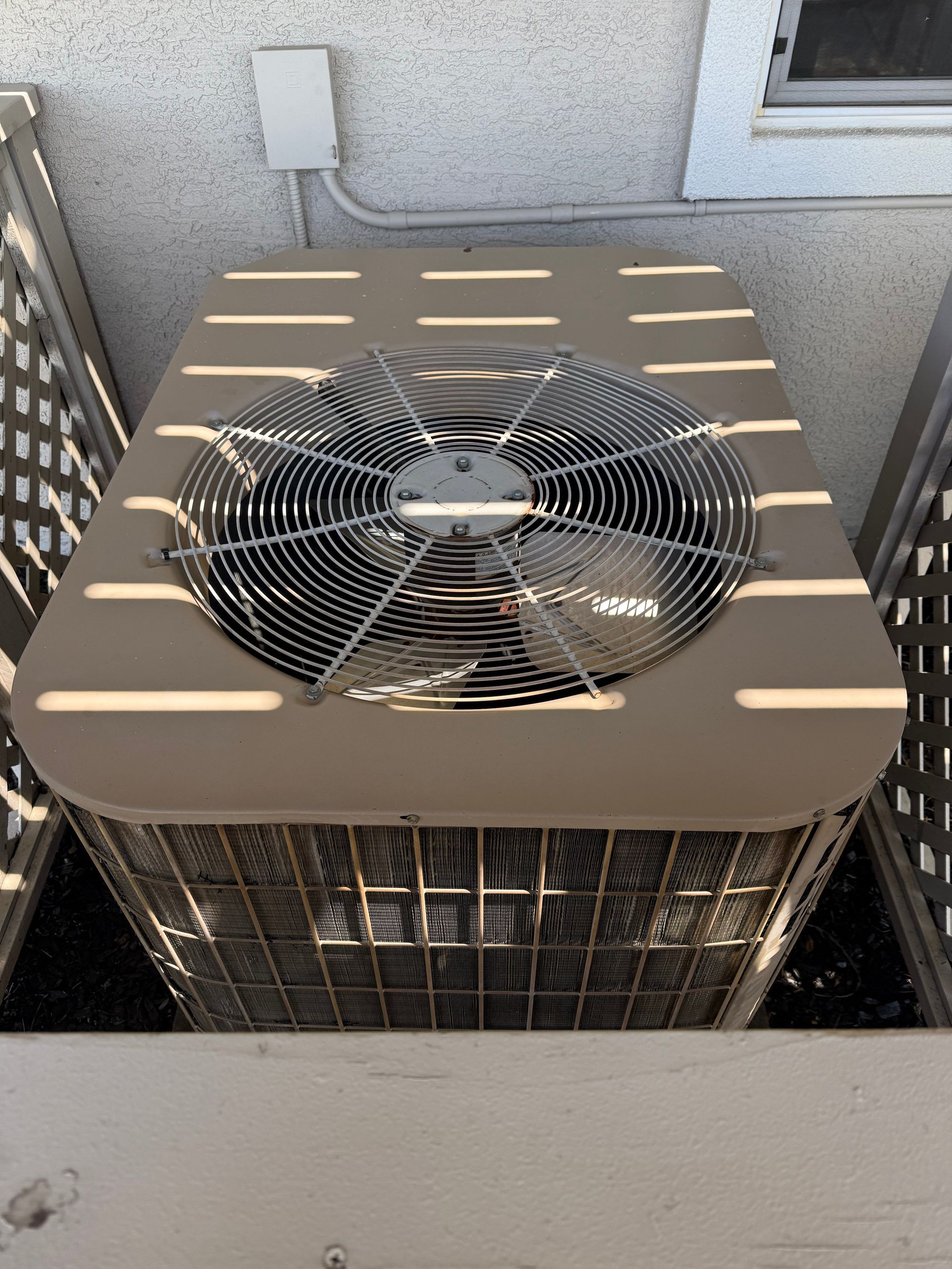
I want to walk through one of these calls from this April, because I think it's a good window into how I work and how I think about old systems in general. HVAC repair and maintenance is most of what I do, and this is a story I think about a lot when people ask me whether their old system is worth saving. The customer's name is Robin. She lives in Citrus Heights. Her AC is 18 years old.
The call: 18 years and a musty smell
Robin called us in early April. She'd just turned her AC on for the first time of the season and noticed a musty smell coming from the vents. The system was running. The air was cold-ish. But the smell bothered her, and on top of that she'd just realized she had genuinely never had the system serviced. Not once in 18 years.
That's not as rare as you might think. A lot of people buy a house, the AC works, and they just leave it alone until it doesn't. Robin's system had quietly been doing its job for nearly two decades.
When I got there, my first job wasn't to start writing up a quote. It was to actually look at what she had and figure out what was going on.
What I actually found on the roof
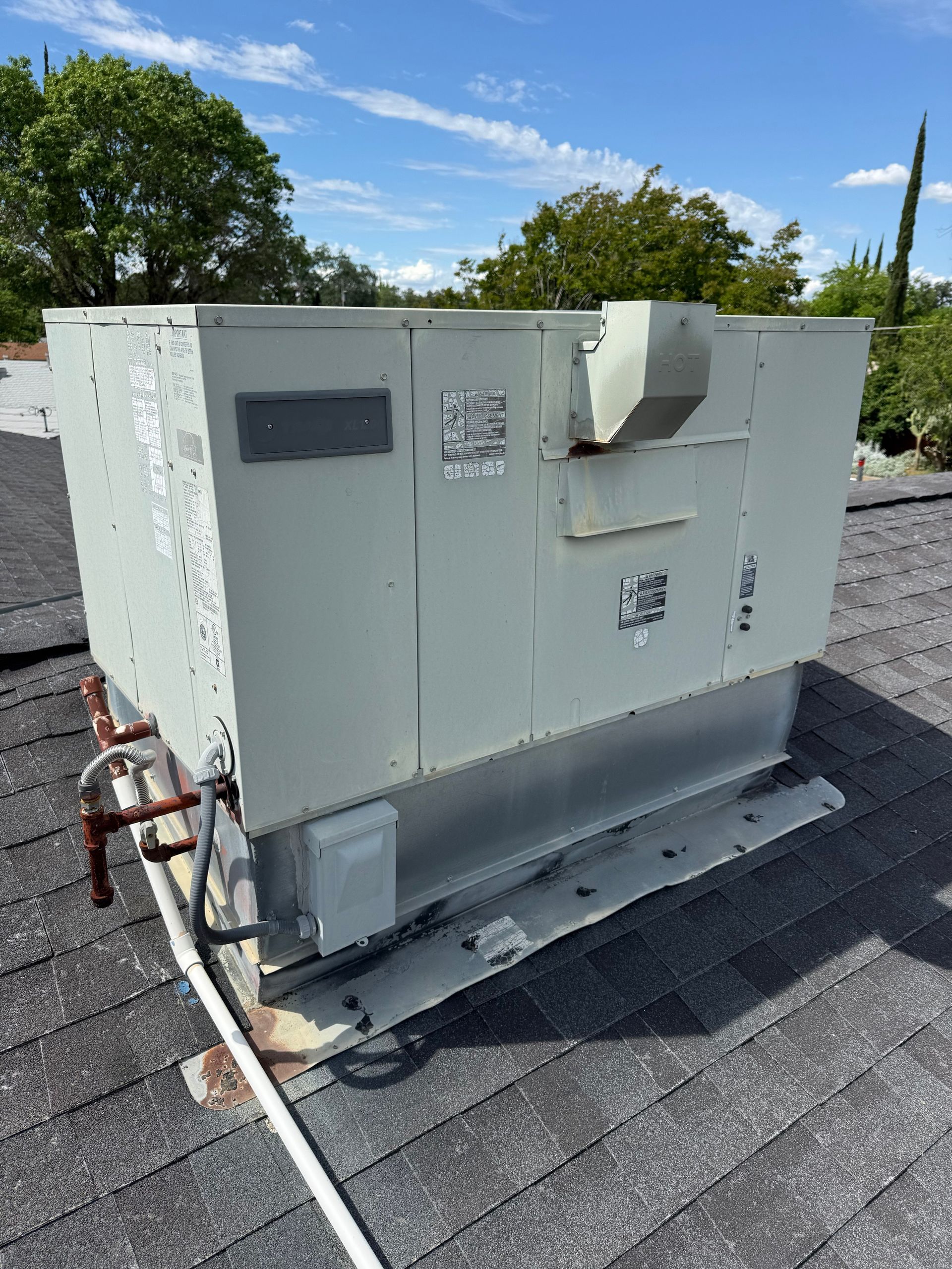
Robin's system is a rooftop package unit, which is common around Citrus Heights and the surrounding Sacramento neighborhoods we cover. Heating, cooling, and air handling all live in one cabinet up on the roof. When I climbed up, here's what I was looking at:
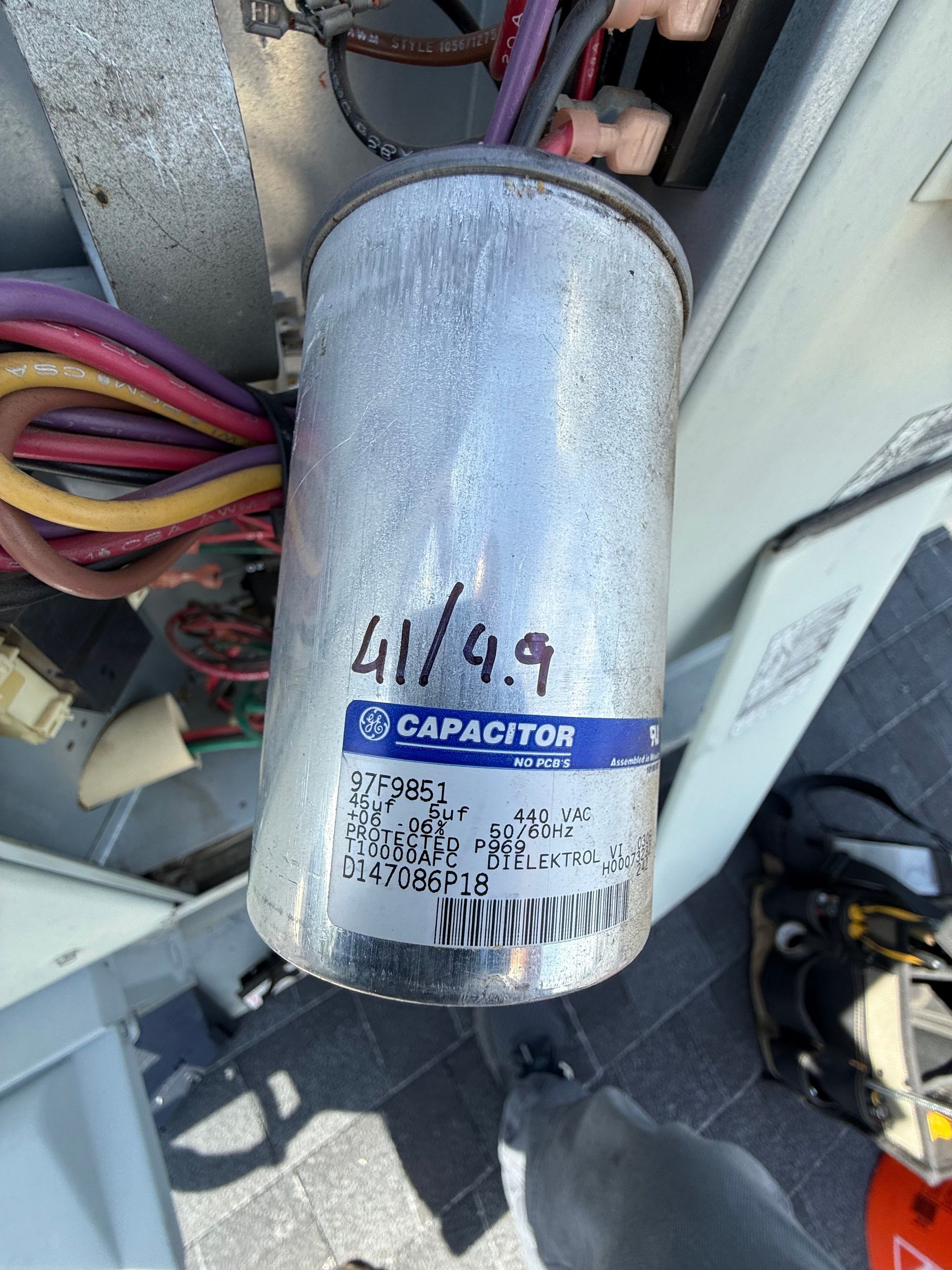
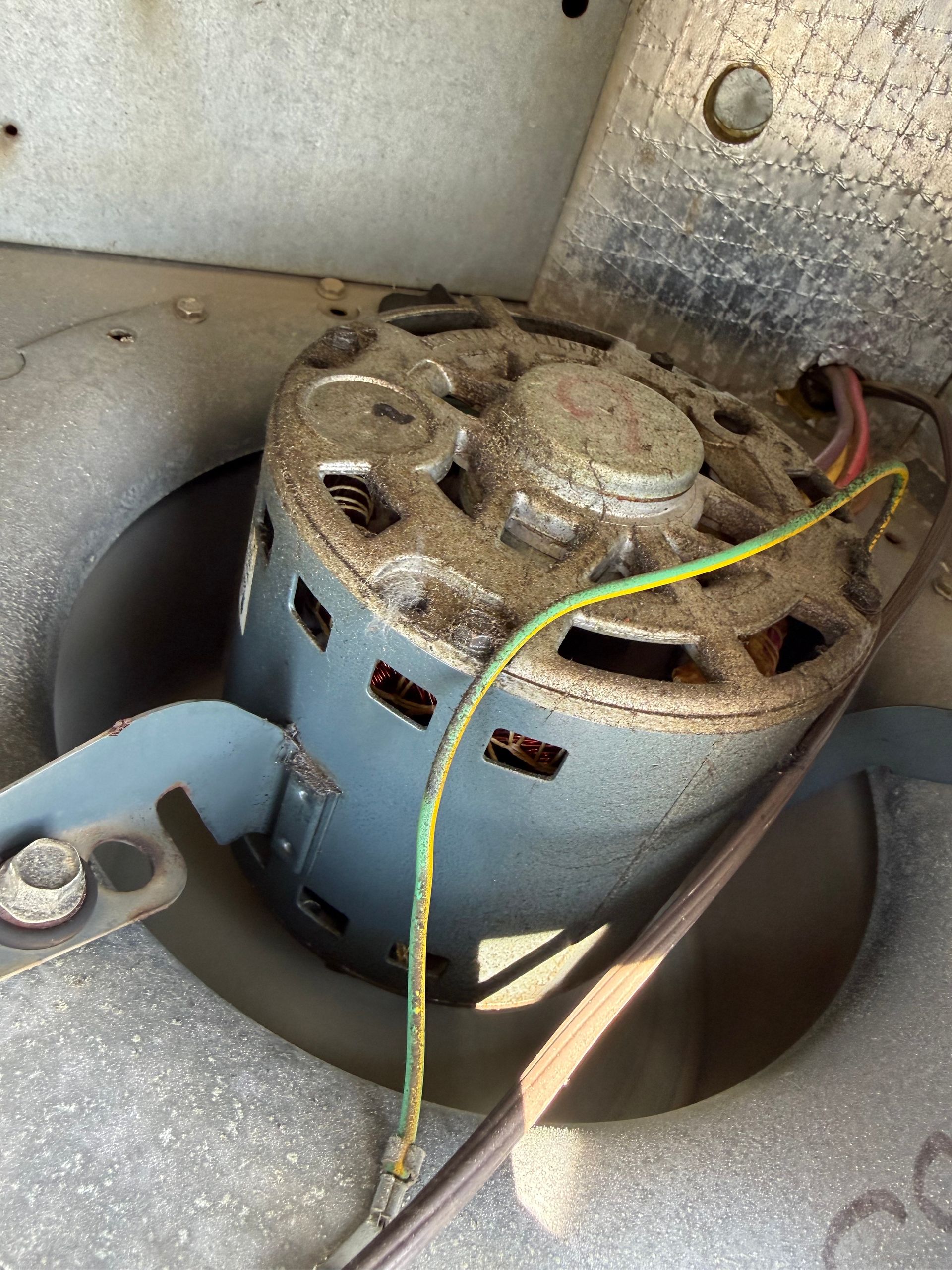
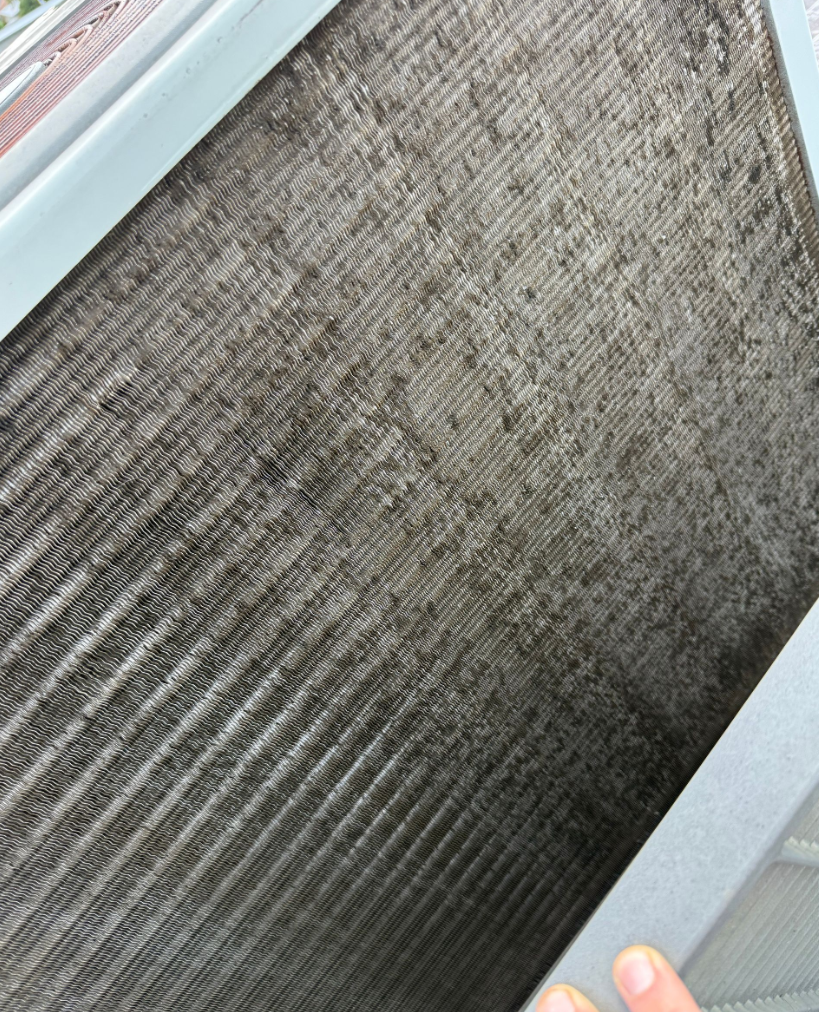
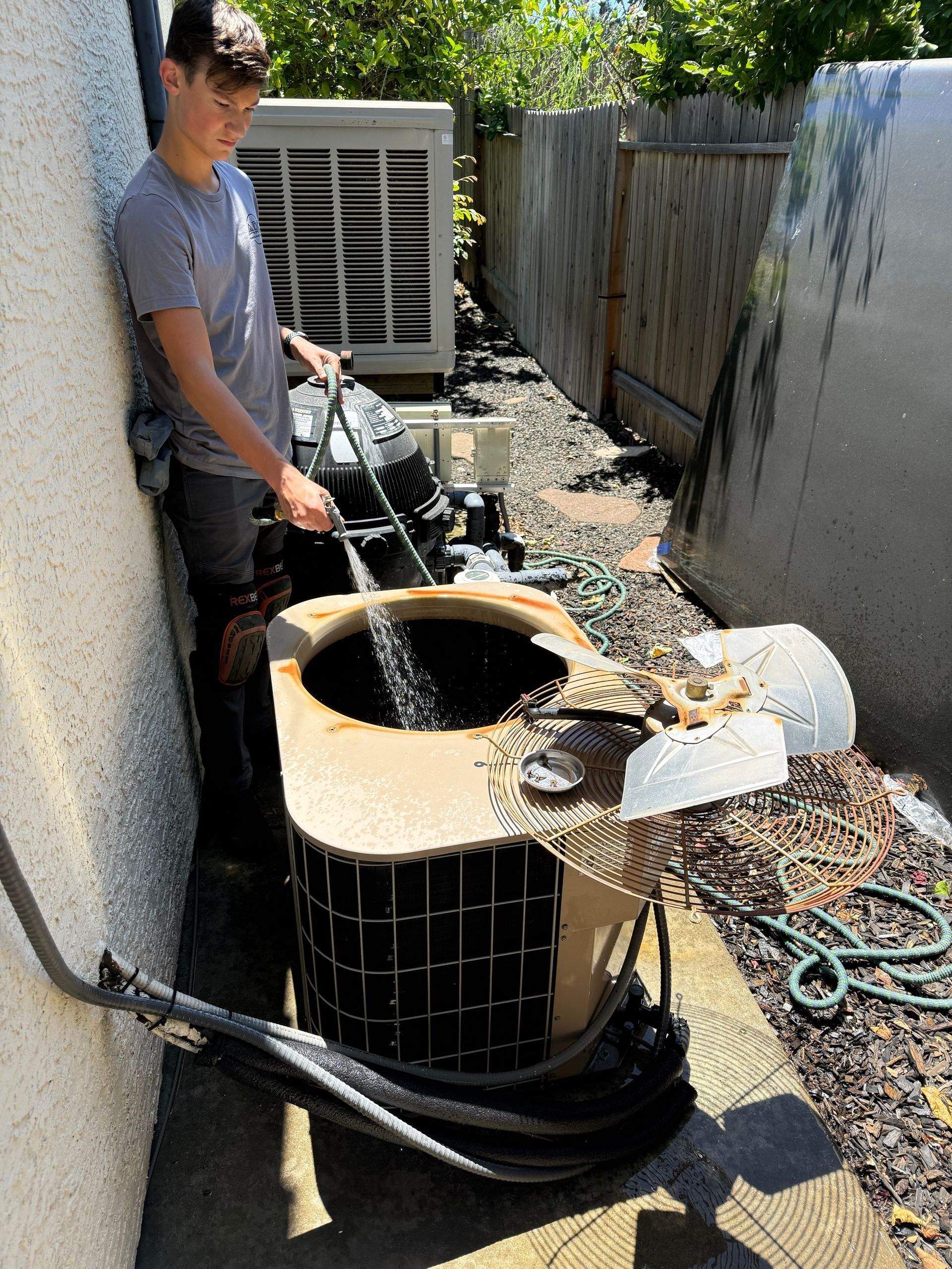
The musty smell wasn't the system "going bad." It was 18 years of buildup on the blower and the coil. Air was passing over a lot of accumulated dust, pollen, and biological matter every time the system kicked on, and Robin was smelling all of it.
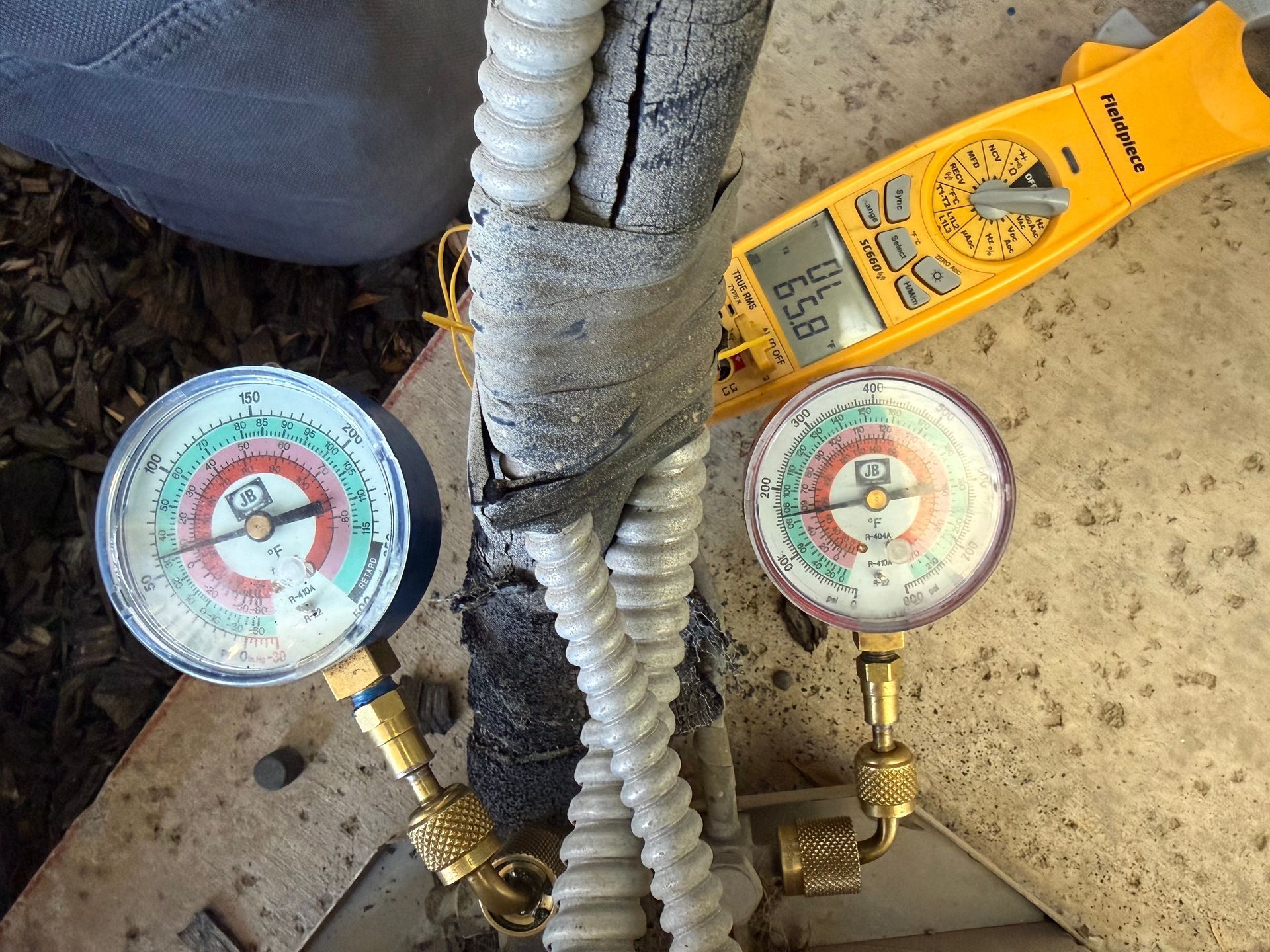
The capacitor was the bigger concern, mechanically. A capacitor is the part that gives the compressor and the fan motor the kick they need to start up. When it weakens, those motors work harder every single start cycle. Robin's was reading well below where it should have been. It was on its way out, and if it had failed completely on a 100-degree July afternoon, the whole call changes. That's when people end up replacing systems they didn't need to replace, just because something quit at the worst possible time.
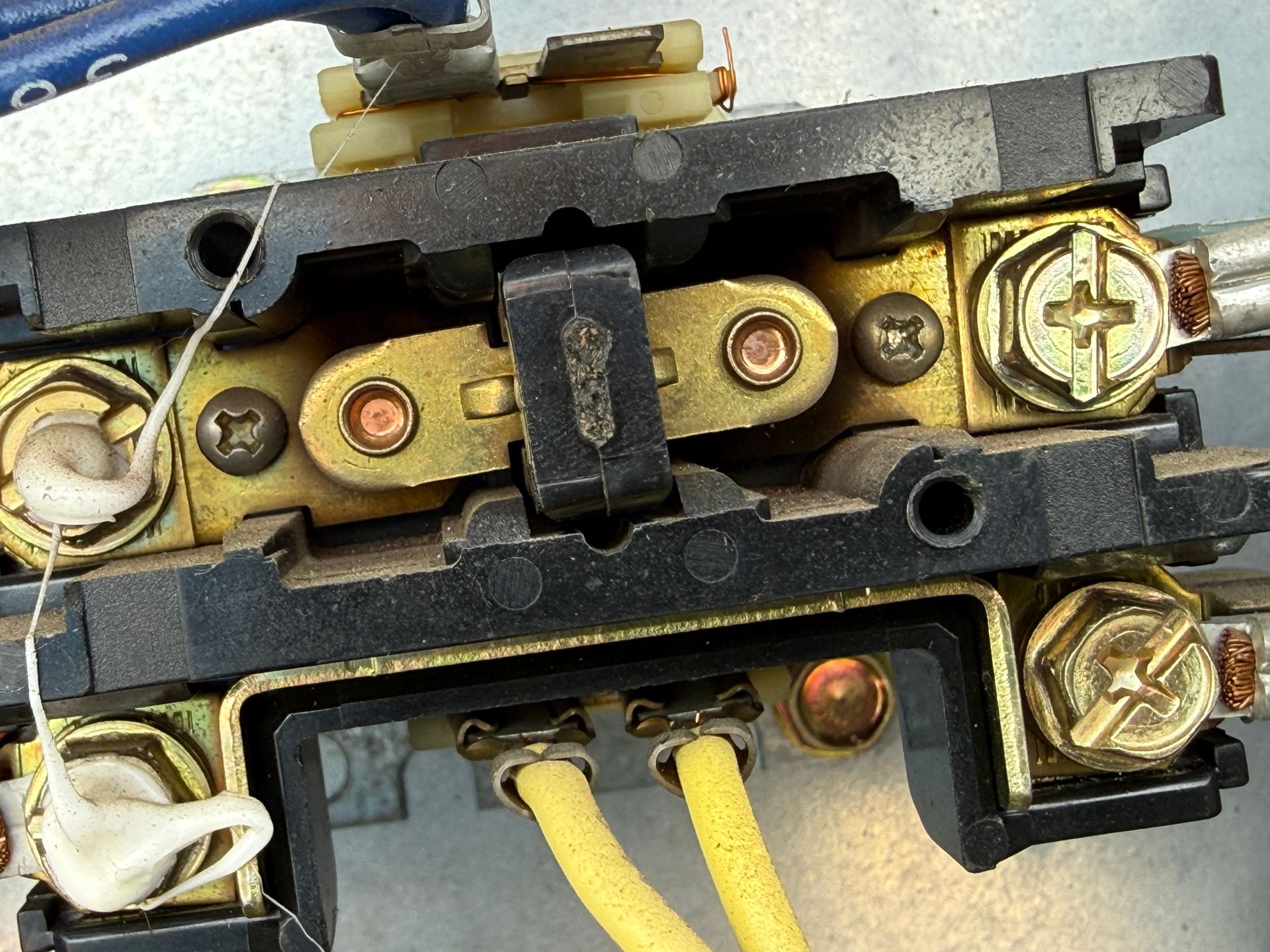
The contactor (the electrical switch that tells the compressor when to turn on) had pitted contacts. Not catastrophic, but heading the same direction.
Beyond that? The compressor was good. The blower motor was tired but functional. The refrigerant charge was holding. The cabinet itself was sound.
The conversation most contractors wouldn't have
This is the part of the visit where the path forks. With 18-year-old equipment in front of you, you have a choice as a contractor. You can frame this as "this system is at the end of its life, here's a quote for a new one." That's not even dishonest, exactly. The system is old. New equipment would be more efficient. Eventually it will need to be replaced.
But "eventually" is doing a lot of work in that sentence. And a homeowner who's been quietly happy with her AC for 18 years doesn't necessarily need to write a five-figure check this spring.
So I climbed back down off the roof and showed Robin the photos. The capacitor reading. The blower. The coil. I told her what I was seeing, what I'd recommend doing, and what I thought it would buy her. Then I gave her the actual decision in plain English.
"Your system is old, but it's not done. We can clean it up, replace the two parts that are actually failing, and you'll get more good years out of it. When the time comes to replace it, you'll know, and we can talk about it then."
She picked the service. We cleaned the blower and the coil, replaced the capacitor and the contactor, checked refrigerant pressures, tested operation, and walked her through what we'd done. Whole job took a few hours. Cost her a small fraction of what a new package unit would have run.
What Robin said afterward
A few days later, this is what she left on Google:
After 18 years without servicing my AC, I turned it on this spring and noticed a musty smell. I'm so glad I called ARC. Vitaliy was thorough, responsive, and informative. He explained everything clearly, showed photos, cleaned the unit and replaced a couple of parts. Great experience from start to finish. I'll definitely use ARC again. Highly recommend!
The thing I want to point out from her review is the part about photos. I take photos on every job, and I show them to the customer before I quote any work. Not because it's a sales technique, but because I think you have a right to see what's actually going on with your equipment before someone tells you what to do about it. That's the difference between a service call and a sales pitch. If you want to see what other homeowners have said about that approach, you can read our reviews.
When an old AC is worth saving (and when it isn't)
I'm not going to tell you every old system is worth keeping. Sometimes the right answer really is replacement. Here's roughly how I think about it on the spot.
Worth saving when:
- The compressor and the cabinet are still mechanically sound
- What's failing is supporting parts (capacitors, contactors, motors) that can be replaced for a small fraction of the system cost
- Refrigerant pressures are holding and there's no obvious leak
- The system is keeping up with the house on hot days
- The homeowner isn't planning to move in the next few years
Time to start planning replacement when:
- The compressor itself is failing or showing signs of imminent failure
- Refrigerant is leaking and the system uses R-22 (no longer manufactured, very expensive to recharge)
- The cabinet has serious rust or structural damage
- The system can't keep up with the house anymore on the hottest days
- You're spending more on annual repairs than a payment plan on new equipment would cost
Robin's system was solidly in the first column. A different homeowner with a leaking R-22 system and a compressor pulling locked-rotor amps would be in the second. That's why I want to actually look at the equipment before I tell anyone what to do.
The case for actually maintaining your AC
Here's the thing about Robin's situation that I think gets glossed over. Her system lasted 18 years without ever being serviced. That's a credit to the original equipment. But it shouldn't be the strategy.
A system that gets a basic tune-up once a year, every year, will outlast a system that gets ignored. The buildup we cleaned off Robin's blower and coil didn't happen overnight. It happened a little at a time, every season, for 18 years. The capacitor we replaced didn't drop out of spec last week. It had been weakening for years, slowly putting more strain on the compressor every start cycle.
I tell every customer this, and I'll say it here: an annual maintenance visit is the cheapest way to extend the life of your equipment. It's not a profit center for me. It's how I keep your system out of the emergency-replacement column for as long as possible.
What this looks like if you call us
This isn't a special process for special customers. This is just how we work, whether you're in Citrus Heights, Roseville, Sacramento, or one of the other communities we serve.
- I come out and actually look at your system. Not a 15-minute look. A real one. I open the cabinet, I take readings, I check the components. If your system is on a roof, I'm on your roof.
- I take photos and show them to you. You're going to see what I see. The good parts and the failing parts. You don't have to take my word for any of it.
- I give you the actual options. Sometimes that's a service. Sometimes that's a repair. Sometimes that's "honestly, you're going to want to start planning for replacement, but you don't have to do it today." I tell you what I'd do if it were my house.
- You make the call, not me. I'm not commission-paid. I'm the owner. There's nobody behind me telling me to push a bigger ticket.
That's it. That's the whole approach. It's not complicated, and it shouldn't be rare, but in this industry it kind of is.
If you've got an old system, let's actually look at it
Whether your AC is 5 years old or 25, you deserve a real diagnosis before anyone hands you a replacement quote. Call ARC and we'll come out, take a look, and tell you what's actually going on.
— Vitaly, ARC Heating and Air Conditioning