Why Is My AC Blowing Warm Air? A Sacramento HVAC Tech Walks You Through It
If you're reading this with a hot house and a thermostat that's not budging, take a breath. I get this call constantly during Sacramento summers, and the system is almost never as broken as it feels in the moment. Most warm-air problems are repairs that fall well short of replacement. Some of them you can troubleshoot yourself in five minutes. The rest are things I can usually diagnose on the same visit and fix on the spot.
I'm Vitaly, the owner of ARC Heating and Air Conditioning. I've been doing HVAC repair, maintenance, and installation in this area for over 20 years. This post is the same conversation I'd have with you on the phone if you called me right now with a warm house. Quick triage first, then the longer diagnostic walkthrough, then a real example from a recent job.
Before You Call: 4 Things to Check Yourself
- Check the thermostat. Make sure it's set to "cool" (not "heat" or "fan only") and the target temperature is below the room temperature. Sounds obvious. Catches more calls than you'd think, especially in spring when people first switch over.
- Check the breaker. Open your electrical panel and look for any breaker that's tripped or sitting halfway. The outdoor unit and the indoor air handler are usually on separate breakers. Flip any tripped breaker fully off, then back on. If it trips again immediately, stop and call. That's a real electrical issue.
- Check the air filter. If it's gray, fuzzy, or you can't see light through it, replace it. A choked filter starves the system of airflow and can freeze the evaporator coil, which makes it blow warm air. This is the most common easy fix I see.
- Look at the outdoor unit. Make sure it's running, the fan on top is spinning, and there's nothing blocking airflow around it. Cottonwood, leaves, dryer lint from a nearby vent, lattice fences placed too close. The condenser needs to breathe.
If those four don't fix it, it's time to call somebody. The rest of this post is so you understand what's actually going on when we show up.
The 5 most common reasons your AC is blowing warm air
These are listed roughly in the order I see them, on residential calls in Sacramento, Roseville, Folsom, and the surrounding communities we cover. Your situation could be any of them, or sometimes more than one at the same time.
1 A failed capacitor
The capacitor is the component that gives the compressor and the outdoor fan motor the kick they need to start up. When it fails, the fan might still spin but the compressor won't engage, which means the outdoor unit isn't actually doing its job. The indoor blower is still pushing air, but that air is just room-temperature air being moved around.
How to tell: Listen at the outdoor unit. If you hear a humming sound but the fan isn't spinning, or the fan is spinning but the unit isn't getting cold to the touch on the refrigerant lines, the capacitor is a strong suspect. Capacitors fail more in extreme heat, which is exactly when you need them most.
2 Low refrigerant (a leak somewhere)
Refrigerant is what your AC uses to actually move heat out of your house. If the charge is low, the system can run all day and never get the air cold. Low refrigerant is always a leak. It doesn't get "used up" the way gas in a car does. So when somebody tells you they "topped off the freon," that's a temporary fix to a leak that's still there.
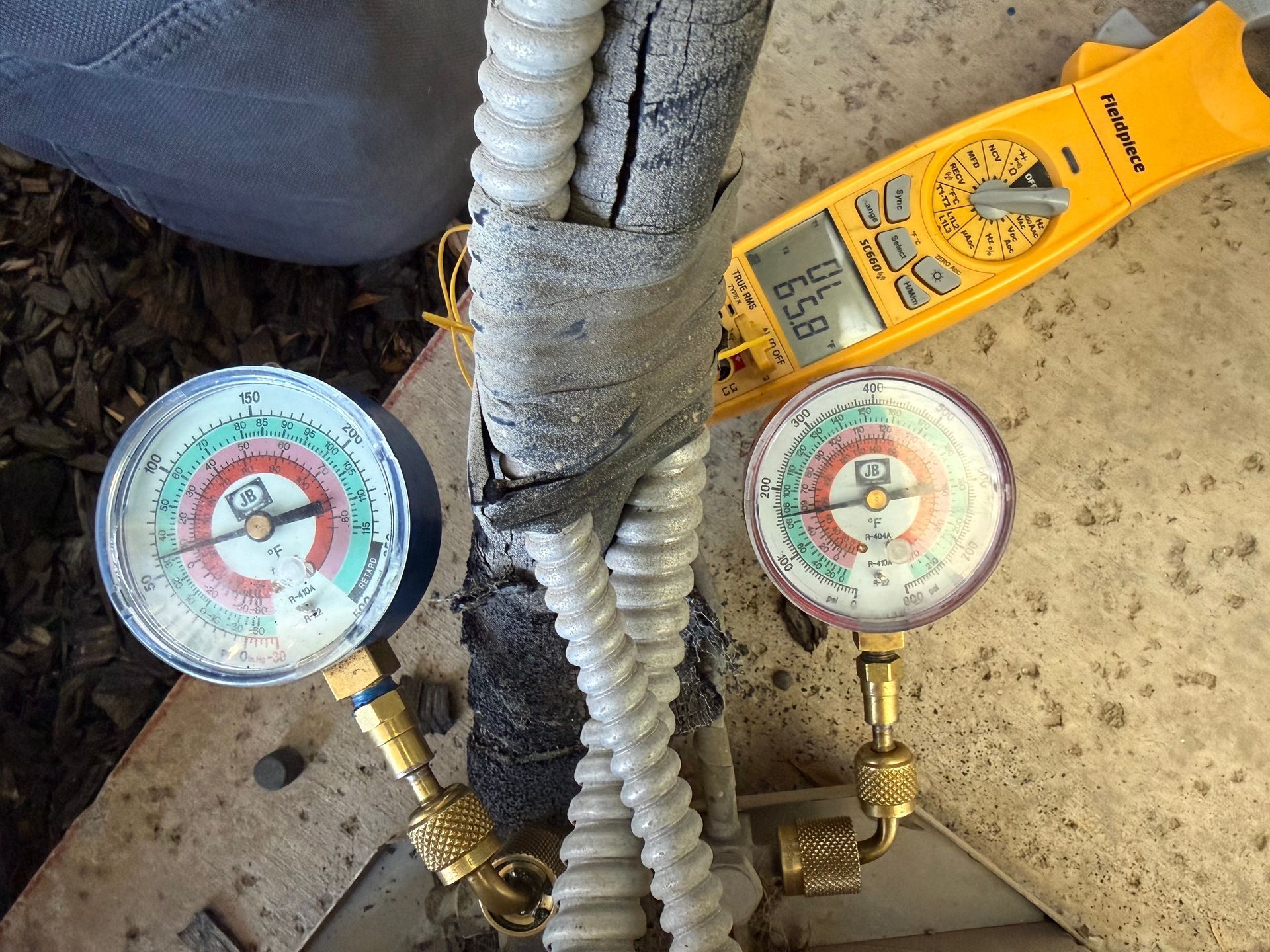
How to tell: The system runs but the air coming out of the vents is only slightly cooler than room temperature. Sometimes you'll see ice forming on the refrigerant line at the outdoor unit. We diagnose this with manifold gauges connected to the system to read actual pressures.
3 A blocked or dirty outdoor unit
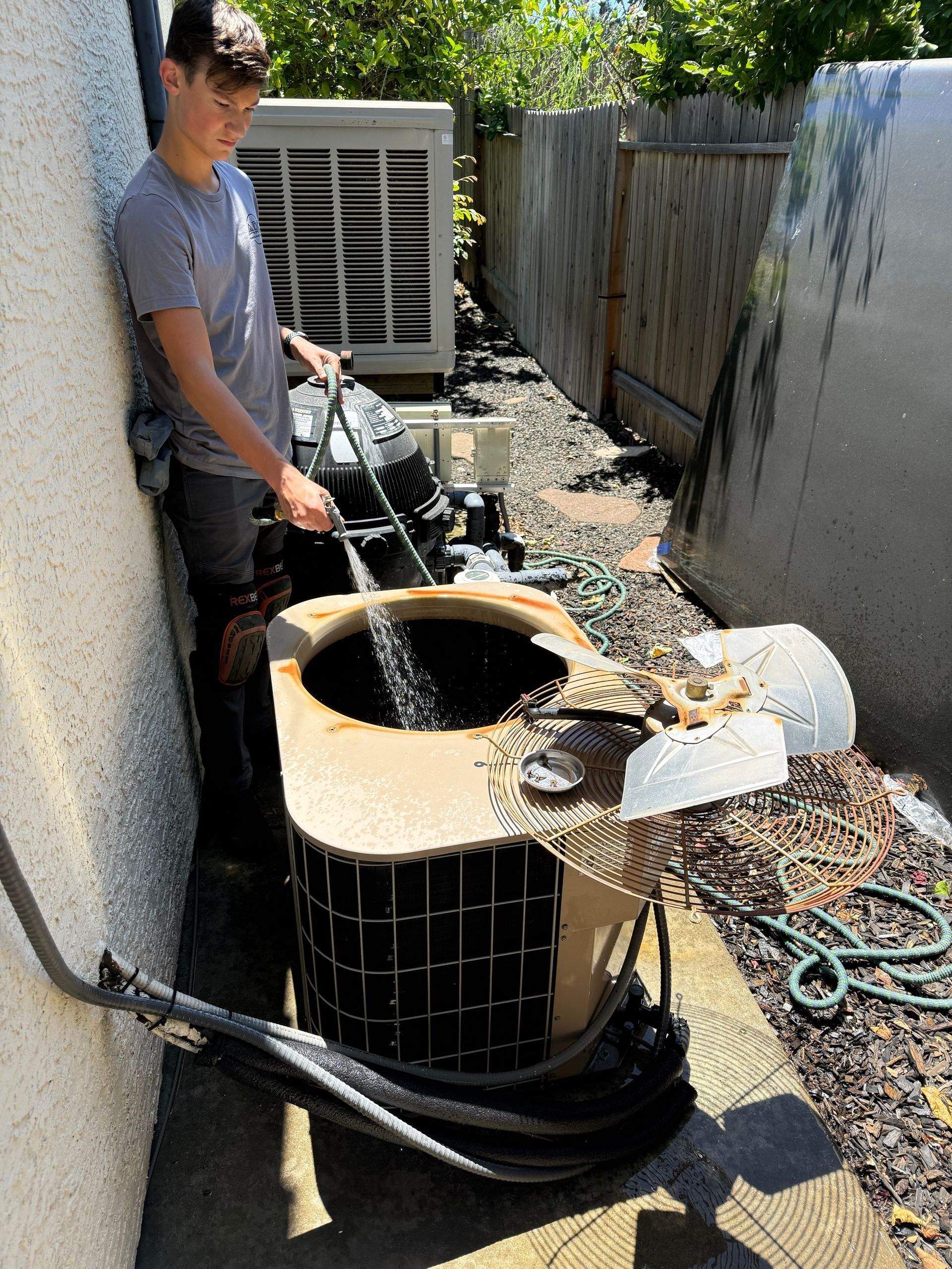
The outdoor unit (the condenser) needs to dump heat out of the house into the outside air. If the coil is packed with dust, cottonwood, dog hair, dryer lint, or yard debris, it can't dump heat. So the system runs but doesn't actually cool. In Sacramento we get hammered by cottonwood every spring and valley dust all summer, and outdoor units take a beating.
How to tell: Look at the unit. If you can't see the coil through the side because it's plugged with debris, that's your answer. Same goes for fences, lattice, or shrubs placed too close. The unit needs at least two feet of clearance on all sides.
4 A clogged condensate drain (and the safety switch that comes with it)
This one surprises people. Your AC pulls humidity out of the air as it cools, and that water has to go somewhere. It collects in a drain pan and exits through a PVC drain line. If that line gets clogged (algae, biological buildup, debris), the pan overflows. Most modern systems have a float switch that detects this and shuts off the cooling stage to prevent water damage. The blower keeps running, but it's blowing warm air.
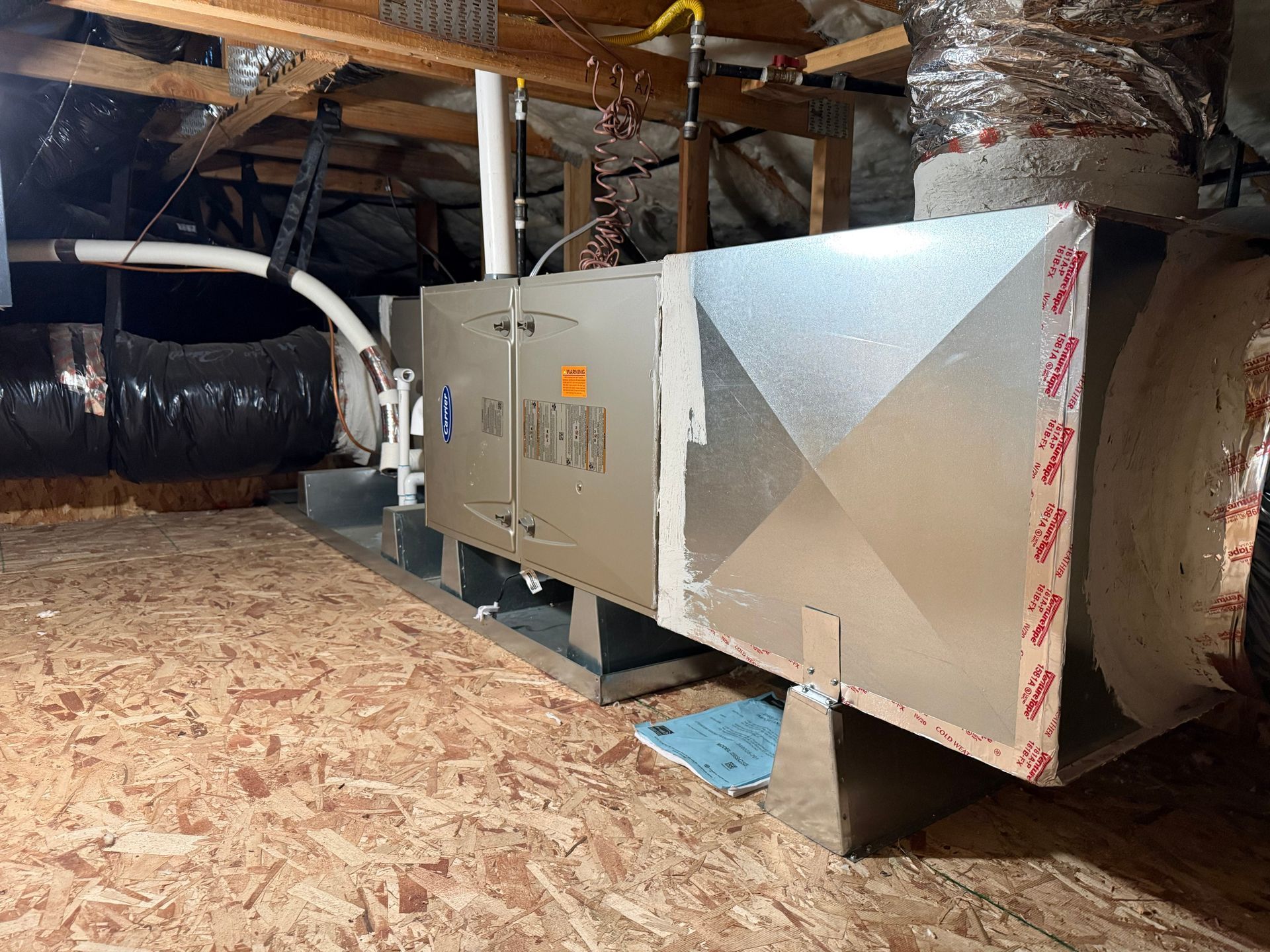
How to tell: Look at the indoor unit (in the attic, garage, or closet). If you see standing water in or near a pan under it, or if the system seems to "kick on but not cool," a tripped float switch is likely.
5 Airflow problems (filter, ducts, or both)
Sometimes the AC is making cold air just fine, but the cold air isn't reaching your rooms. A choked filter restricts airflow back to the system. Crushed, torn, or disconnected ductwork in the attic dumps your conditioned air into the attic instead of into your house. I find collapsed flex duct on a regular basis, especially on systems that are 15+ years old or have had pest activity in the attic.
How to tell: Some rooms feel okay, others feel hot. The system runs constantly but never quite catches up. The filter looks bad. Or if you can safely look at your attic, you can sometimes see the duct issue directly.
A real Folsom example: Matt's older AC
Earlier this spring I went out to a customer named Matt in Folsom. His AC wasn't blowing warm yet, but he wanted a tune-up on an older system before summer hit. This is the smartest version of this call, by the way. Tune-ups in March and April catch problems before they turn into July emergencies.
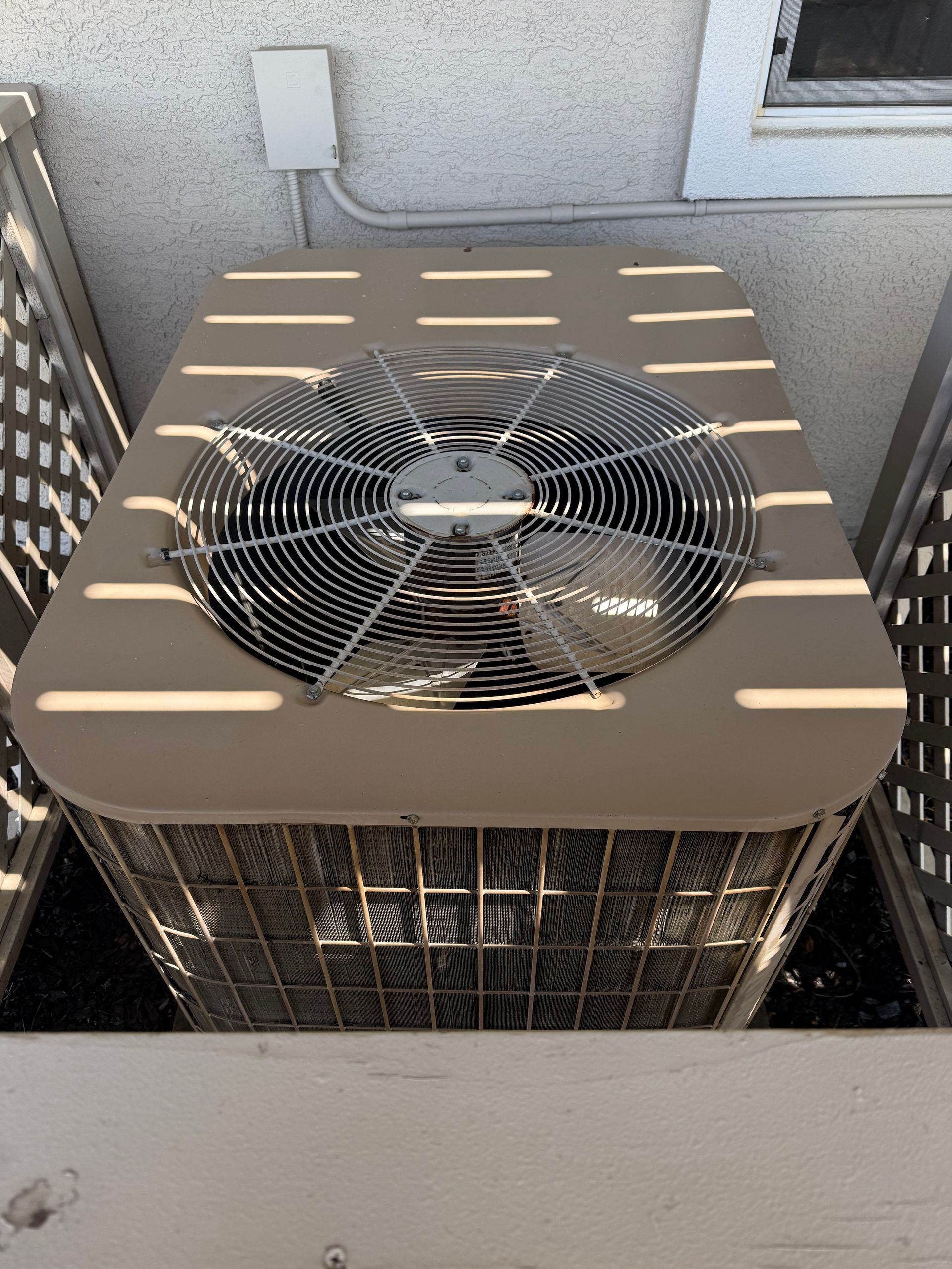
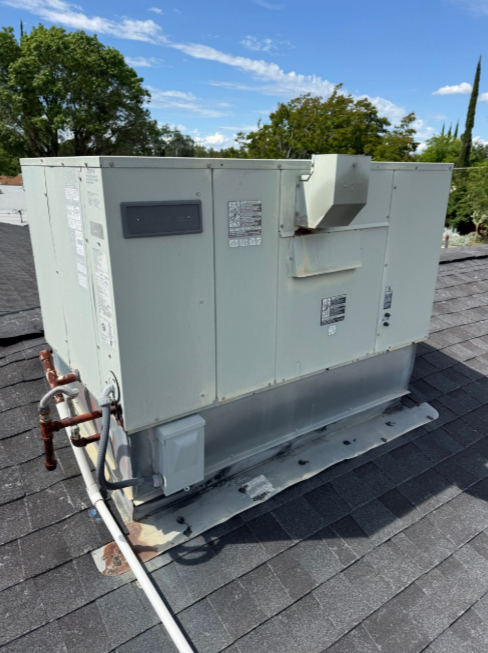
When I got into the diagnostic, I found a few things that, individually, weren't catastrophic. But stacked together? They were the recipe for a warm-air call in mid-July. This is exactly the kind of situation I'm describing above, just caught a few weeks early.
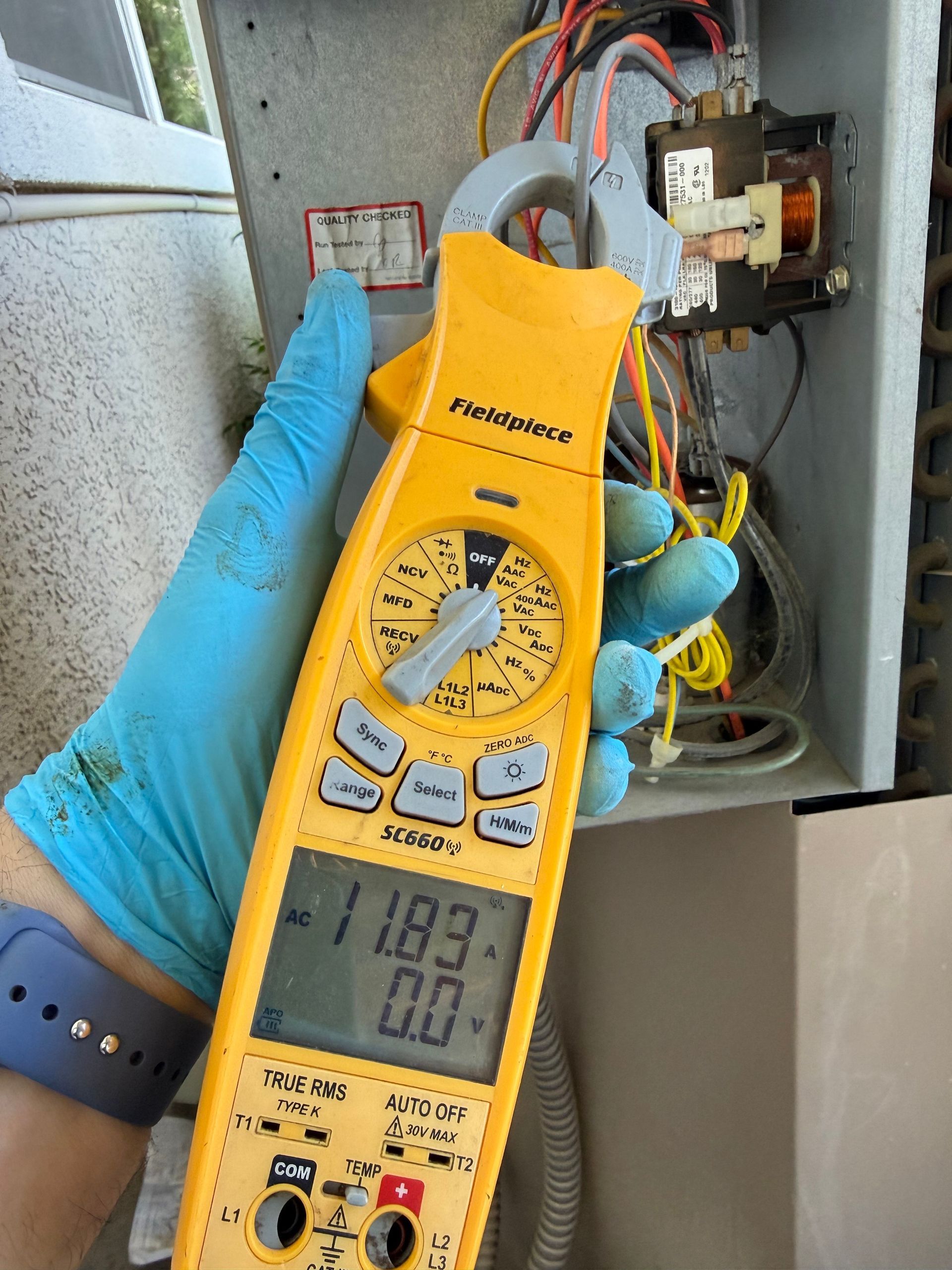
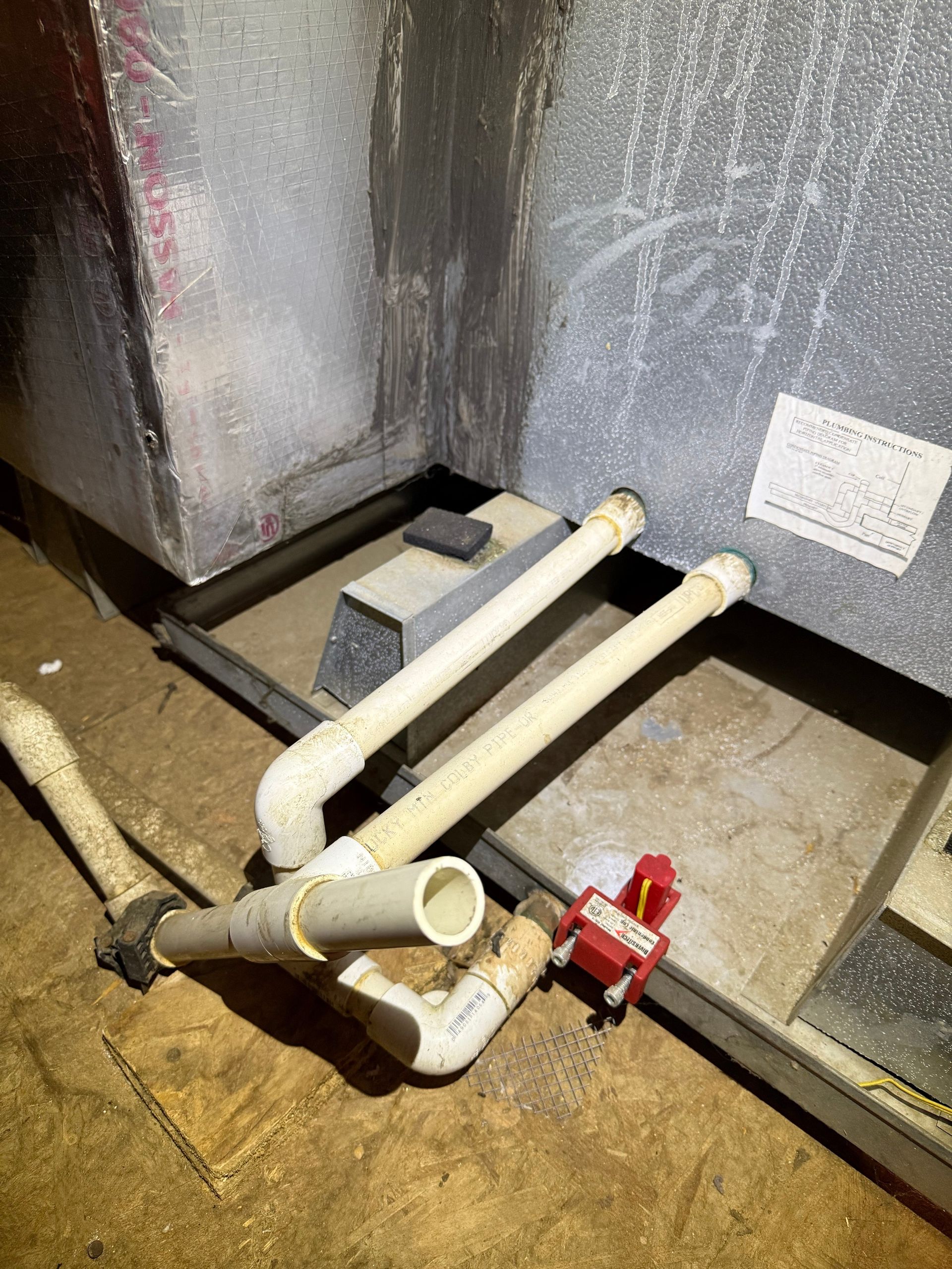
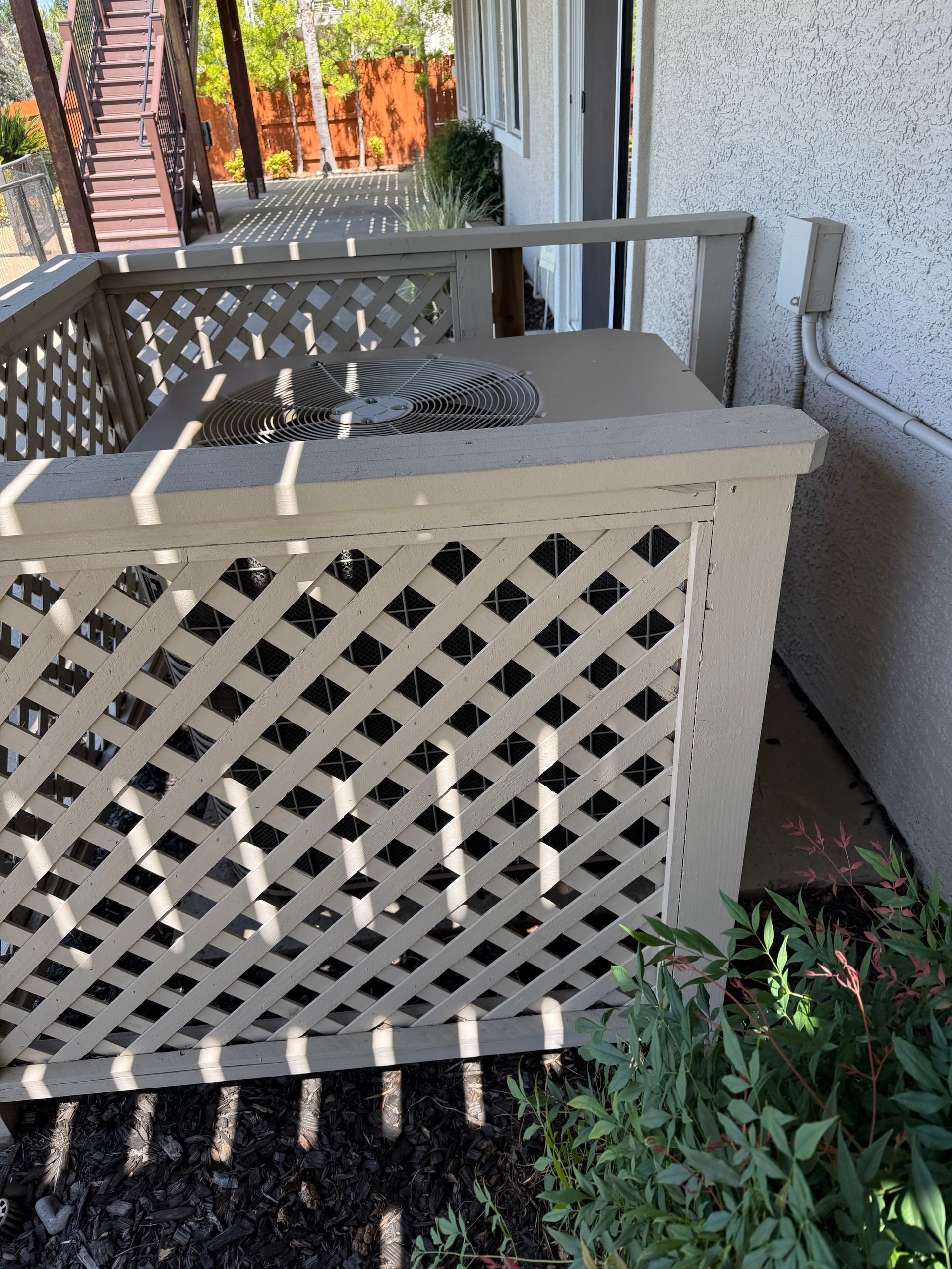
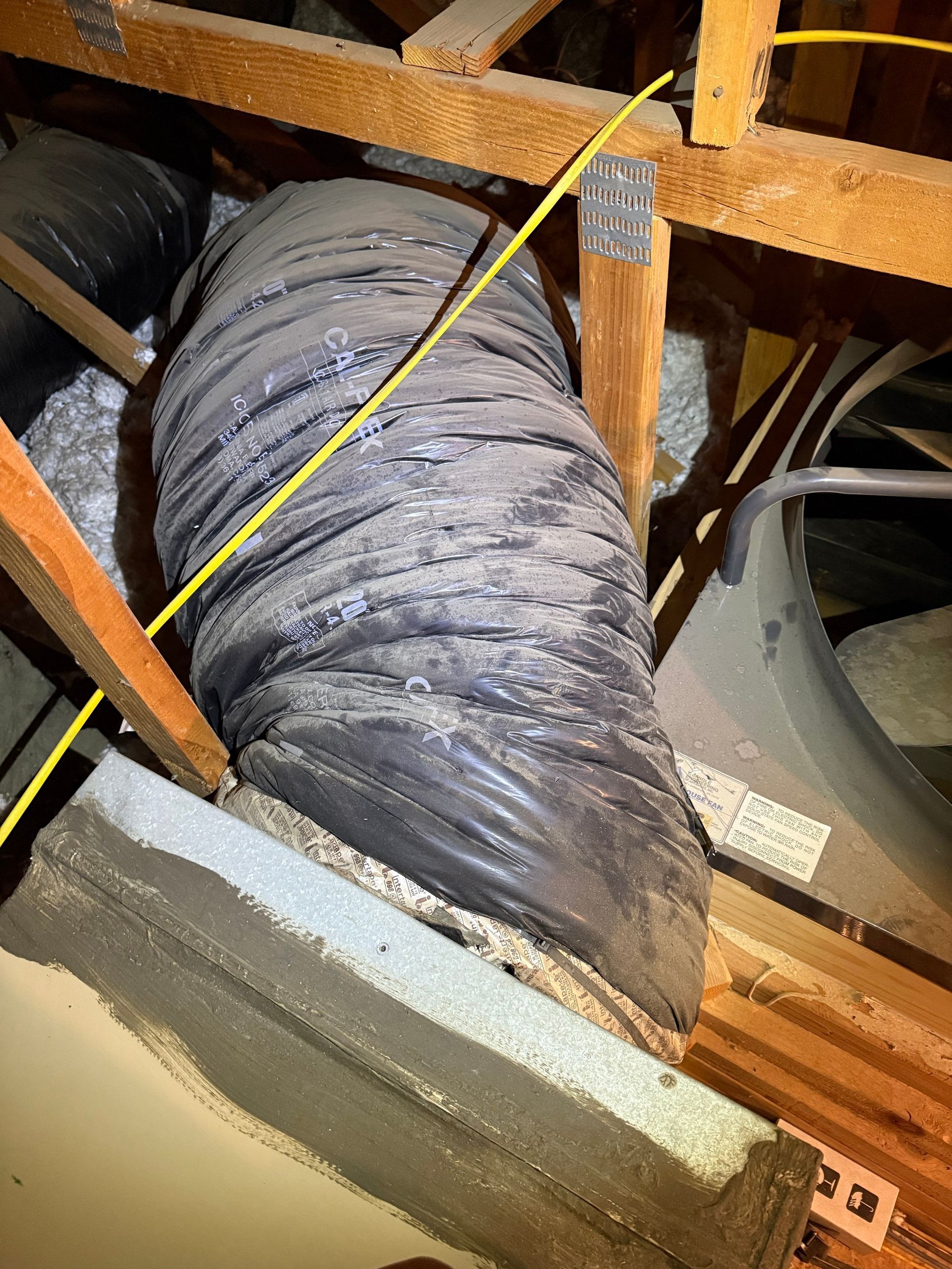
Four separate things, each on its own a small problem, all of them building toward a system that was going to struggle on the first 105-degree day. I put together a clear plan for Matt to address them in order of urgency, and got his older AC ready for what's coming.
A few days later he left this:
Vitality came out to service my older model AC. Was punctual and did a great job. Diagnosed some issues and put together a clear plan to get them corrected and keep it running smoothly. Very pleased and highly recommend ARC.
The reason I bring up Matt's job in a post about warm-air calls is that he's the version of this story that doesn't end with an emergency call in July. The same problems were there. He just chose to deal with them in March instead of August. You can read more reviews from homeowners we've worked with if you want a sense of what that looks like across other jobs.
"By the time your AC is blowing warm air, the issue has usually been building for a while. The fix is almost always cheaper if you catch it before it becomes an emergency."
What it costs to figure out what's wrong
A diagnostic visit for a warm-air call in the Sacramento area typically runs $150 to $300. That covers the trip, the time on site, and a real diagnosis (gauges on the system, electrical checks, airflow checks, the works). It's not a 15-minute look. If we end up doing the repair the same day, that diagnostic fee usually rolls into the repair cost.
Repair costs vary depending on what we find:
- Capacitor replacement:$250 – $500
- Contactor replacement:$200 – $400
- Coil cleaning (outdoor):$200 – $400
- Drain line clear and pan service:$150 – $400
- Refrigerant leak repair:$300 – $1,500+ depending on the leak location
- Duct repair:$300 – $1,500+ depending on scope
If the news is bigger than that — say, the compressor itself has failed on an older system — that's a different conversation, and it's one I want to have with the actual equipment in front of me, not over the phone. We covered the "is my old system worth saving" decision in a separate case study if you want a deeper read on that.
When to call (and what to expect when you do)
If your house is hot, you've checked the four things at the top of this post, and you're still not getting cold air, it's time to call. During Sacramento heat waves we prioritize same-day or next-day scheduling for no-cool calls, depending on demand. The earlier in the day you call, the better your chances of same-day service.
When you call ARC, you talk to me. I'll ask you a few questions to figure out how urgent it is and what we're likely walking into. I'll give you a real arrival window, not a "between 8 and 5" window. When I get there, I diagnose with gauges and electrical readings, take photos, show you what I'm seeing, and quote the actual repair before I do it. No pressure, no upsell, no surprises.
If your AC is blowing warm, let's get it sorted
Call ARC and we'll come out, take a real look, and tell you what's actually going on. Same-day service available during heat waves.
— Vitaly, ARC Heating and Air Conditioning